
Overlapping Objectives
As year-end approaches, many clients look for ways to align smart financial planning with meaningful charitable impact. Strategic giving can reduce taxable income, and donating appreciated assets such as real estate may eliminate capital gains taxes while still allowing a deduction for the full market value. Charity Navigator is a great resource to select well-rated nonprofits that offer qualified organizations.
When I first sit down with a real estate investor, whether they’re seasoned or just beginning, the conversation almost always starts the same way. We talk about goals. Income. Risk tolerance. Time horizon. But very quickly, the discussion turns to one critical financial metric: What capitalization rate or cap rate are you targeting?
The cap rate is the backbone of investment real estate analysis. In its simplest form, it measures the annual return on an all-cash purchase, calculated as: Cap Rate = Net Operating Income (NOI) ÷ Purchase Price. It tells me instantly how an investor views risk versus return. Some investors are comfortable with lower cap rates in exchange for stability and long-term appreciation. Others want higher yield and are willing to take on more risk to achieve it. Understanding that target cap rate allows me to guide investors toward the right type of properties.
Average National Cap Rates by Real Estate Sector
Cap rates vary by property type, market conditions, and tenant profile, but recent national data shows stabilized U.S. averages generally ranging from the mid-5% to low-7% range for multifamily, industrial, and self-storage, with higher cap rates for office, hospitality, senior housing, and income-producing land, reflecting greater risk and return potential. These figures reflect pure investment performance, without accounting for personal use or lifestyle benefits.
What About Cap Rates for Beach Homes?
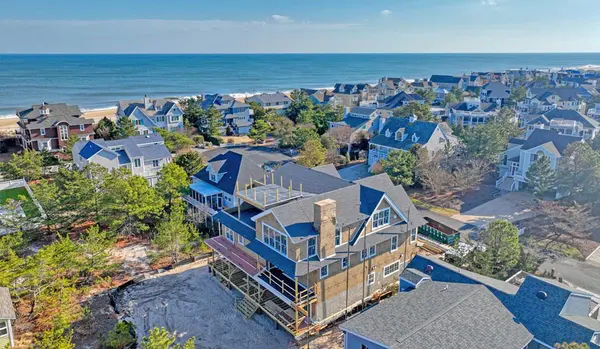
Beach homes operate in a very different category. They are part investment, part lifestyle asset. On average, coastal short-term rental beach homes in pur market typically trade at 4.5% – 6% cap rates on stabilized gross rental income.
Several factors compress cap rates in beach markets:
- Extremely high barrier to entry (limited oceanfront and bay-front supply)
- Strong seasonal demand with premium weekly rents
- Long-term appreciation tied to coastline scarcity
- Heavy owner-use reducing available inventory
Unlike commercial properties, beach homes also benefit from personal use, which materially affects the true return when viewed holistically.
Let’s compare two simplified scenarios:
Scenario 1: Delaware Beach Home
- Purchase Price: $1,500,000
- Net Annual Rental Income: ~$75,000
- Cap Rate: ~5.0%
- Personal Use: 4–6 prime summer weeks per year
- Lifestyle Value: Family vacations, legacy asset, appreciation
Scenario 2: Multifamily or Retail Investment
- Purchase Price: $1,500,000
- Net Annual NOI: ~$90,000
- Cap Rate: ~6.0%
- No personal use
- Purely financial return
On paper, the multifamily or retail asset produces slightly higher annual yield. However, it offers zero lifestyle return, no personal enjoyment, and no emotional or experiential value for your family. The beach home, while slightly lower in pure yield, delivers:
- A hedge against inflation
- Long-term appreciation in an irreplaceable market
- Priceless family memories
- Repeat personal enjoyment year after year
Try placing a financial value on:
- Summer weeks with your children and grandchildren
- Holidays at the beach without hotel rates
- The ability to personally enjoy the asset while it works for you financially
It’s nearly impossible, and that’s exactly the point. When advising investors, I often remind them:
- Commercial real estate excels at income and scalability
- Beach homes excel at experience, legacy, and long-term wealth preservation
- Both can and often should coexist in a well-balanced portfolio
Some of my most successful investor clients own multifamily or retail in metro areas for predictable income and one or two coastal properties for diversification, appreciation, and lifestyle.
Final Thought
Cap rates will always matter. They guide pricing, shape negotiations, and drive investment decisions. But when it comes to coastal real estate, the conversation expands beyond spreadsheets. A Delaware beach home may deliver a 4.5%–6.0% financial return, but when you factor in personal use, long-term appreciation, and priceless family experiences, the true return often far exceeds what any commercial property alone can offer.
If you’d ever like to compare a potential beach home investment against a multifamily, retail, or rental portfolio opportunity, I’m always happy to walk through the numbers and the lifestyle implications, side by side.
Happy Holidays! -Henry
Categories
Recent Posts







"I am committed to supporting clients in making informed real estate decisions, providing superior service, and generating results. Please give me a call or email if you have questions; I'm here to bring value, insight, and efficiency to your real estate objectives." -Henry Jaffe